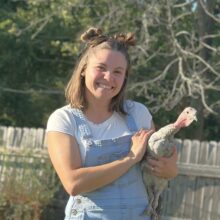
For most of her life, Malarie Hensley defined herself by motion. A dedicated runner, she completed two marathons and eight half‑marathons, spending countless weekends on long runs with friends. When she wasn’t logging miles, she was outside tending to her family’s expansive garden or caring for nearly 100 chickens. Being active wasn’t just something she enjoyed—it was part of who she was.
Early in 2025, things began to change in ways she didn’t yet understand. In January, she noticed Raynaud’s phenomenon, the first subtle sign that something in her body wasn’t working as it had before. The months that followed brought shifts that were harder to ignore. By May, her symptoms progressed enough that she and her care team began the process of figuring out what was happening. After a whirlwind of testing, appointments, and uncertainty, she received her diagnosis in July: dermatomyositis.
The diagnosis reshaped her life. Activities that once felt effortless—running long distances, spending full days outdoors—became difficult due to a persistent lack of energy and muscle soreness. Yet even in the frustration of losing some of her favorite routines, Malarie found strength in the support of those around her.
Her family has been a constant anchor, especially when it comes to caring for her five‑year‑old son. On days when fatigue hits hardest, they keep him after school so she can take a much‑needed nap. Twice each month, on infusion days, her husband sits with her during the seven-hour process and cares for her as she’s recovering. Her mom also steps in to care for her son on infusion days, planning special activities to make the time feel fun for him while giving Malarie space to focus on treatment.
Her medical team has been equally essential. From her first rheumatologist, who approached her case with urgency and determination, to her current specialist, who wasted no time implementing a treatment plan, Malarie has always felt supported by clinicians who take her symptoms seriously. She trusts them fully and knows she can reach out between appointments whenever concerns arise. Her infusion nurses have also played a meaningful role, helping her navigate medication side effects and ensuring she feels comfortable during the seven hours she spends with them on infusion days. They taught her the importance of hydrating well beforehand—something she has never forgotten after the one time she didn’t and ended up with a migraine.
When she needed guidance beyond her local resources, The Myositis Association (TMA) became a lifeline. Through the TMA website, she found the dermatomyositis specialist she now travels three hours to see. More than that, she found a community—other people who live with myositis and understand the unique challenges it brings. Those connections have offered validation, empathy, and a sense of belonging.
Navigating life with myositis requires constant adaptation, and Malarie has developed routines that give her both grounding and control. One of her most meaningful practices is waking up an hour earlier each morning—not to rush, but to ease into the day. With a cup of coffee and a book or a favorite TV show, she gives her body time to warm up, her mind time to settle, and her spirit time to breathe.
Her experience has taught her hard‑earned lessons, including one she wishes every future physician understood: dermatomyositis can be present even when antibody tests come back negative. Her own diagnostic journey showed her just how important it is for clinicians to look beyond lab results and listen closely to patients.
Even with the changes myositis has brought, Malarie continues to lead with resilience, community, and hope. Her message to others walking a similar path is simple but powerful:
You are not alone. Find your people—and let them support you.